How a Multi‑Brand Holding Company Can Use One AI Imagery Platform Across All Its Brands

Introduction
Your premium denim brand just uploaded a gritty, high‑contrast hero image that looks nothing like the polished, minimal studio shots your sister label released last Tuesday. Across six brands, three different freelance retouchers, and a scattering of new AI tools, the visual identity of the portfolio is dissolving into noise. Each brand is burning budget duplicating the same operational scaffold while creating assets that actively undermine each other in the market.
The fix is not another round of brand guidelines PDFs that no one reads. It is one managed AI imagery platform that centralizes the heavy operational lifting while enforcing specific visual and data separation for each brand.
Perry Ellis International runs six ecommerce brands from one operations team using this model: shared infrastructure with distinct brand configuration. The outcome is speed and consistency without the generic flatness that sinks portfolio‑wide visual strategy.
Key Takeaways
Below is the core strategic logic that makes a single managed visual platform operationally superior to a patchwork of tools across a multi‑brand portfolio.
Centralized operations eliminate fragmentation: One infrastructure layer with one billing relationship prevents each brand from rebuilding the same workflows, as demonstrated by a portfolio where six ecommerce brands run from one operations team.
Brand DNA forces distinguishable output: Training a discrete AI model exclusively on each brand's own style guides and approved imagery ensures that identical briefs produce visually distinct results that do not blur one brand into another.
Isolated knowledge bases stop data bleed: Separate knowledge banks per brand mean a query about one label's return policy or proprietary IP never pulls data from a sibling brand, with every output routed to a human for verification before it goes live.
Scalable content across every channel: A shared structural template flips brand‑specific data to generate product shots, lifestyle scenes, ad creative, social graphics, and email banners across multiple channels and languages without redundant creative rebuilds.
AI‑driven analytics compress performance insight: Complex dataset analysis that used to take days to parse now surfaces in minutes, letting teams compare per‑brand conversion metrics and catch underperforming creative before customers do.
Pricing and trust scale predictably: Pricing modeled at current and projected brand counts, combined with monitoring each brand's presence in AI assistants like ChatGPT and Gemini, preserves both financial control and long‑term trust signals.
Step 1: Centralize Operations with a Managed AI Platform, Not a Toolkit
A managed platform gives you one operational layer that absorbs the infrastructure, billing, and technical upkeep. Your team stops building the same pipeline over and over.
The difference is practical. A bare toolkit forces each brand to buy its own point solutions, hire prompt engineers, and stitch together workflows on separate timelines and budgets. Those workflows drift.
A managed AI imagery platform runs a single billing relationship and one operations team across the whole portfolio. You get one throat to choke, a standardized production layer, and each brand keeps its own approvals, outputs, and reporting. Without that shared layer, you end up with Brand C running two model versions behind Brand A, plus duplicate license fees and overlapping freelance contracts.
You can use a platform like Lumesa to supply the shared pipeline and set brand-specific rules inside it. The architecture is one platform serving many brands, not many platforms each serving one brand.
Step 2: Encode Brand DNA to Enforce Visual Consistency
The success metric is blunt: two brands receiving the identical "streetwear campaign, dusk lighting, concrete backdrop" brief must produce images that a consumer can correctly attribute to each label without a logo.
Lumesa's approach captures over 200 visual attributes from a brand's reference images and encodes them into a Brand DNA system. The AI learns the lighting ratios and composition rules that make a brand recognizable. It picks up the styling system and color tolerance, too. An AI platform that trains a discrete model per brand exclusively on that brand's style guides, approved hero shots, and fit standards eliminates the flat, interchangeable aesthetic that happens when one voice wears two logos. The model improves with every approved batch, reinforcing the specific visual guardrails rather than drifting toward a generic midpoint.
Step 3: Isolate Knowledge and Data to Prevent Brand Bleed
A customer clicks the chatbot on Brand A's site and asks about their return window. If the underlying data layer is shared, the answer might quote Brand B's policy instead. That single wrong sentence destroys credibility forged across years of careful brand positioning.
Each brand inside a single platform needs its own walled-off knowledge base.
The query engine for Brand A has zero access to Brand B's proprietary data, product information, or internal rules. That isolation keeps proprietary information from bleeding into another brand's outputs. A brand-specific human reviewer still checks content before anything goes live, catching the subtle slip-ups automation misses.
The system also learns from every rejection, tightening its data boundaries with each review cycle. One legal slip or data leak across brands will cost more than any efficiency the shared tooling ever saved. Learn more about multi-brand AI platforms.
Step 4: Scale All Visual Content Types Across Every Channel and Language
A managed platform reuses structural templates across every output format. Only the brand-specific data layer changes per asset.
Content Type | Template Logic | Brand-Specific Data Layer |
Product-only images | Standardized lighting, angle, and framing | SKU-specific product, color, and texture swatches |
Ghost mannequin shots | Invisible mannequin surface and shadow path | Garment shape, fit, fabric, and internal labels |
On-model campaign photography | Pose, scene composition, and lighting ratio | Model identity, location, styling, and apparel SKU |
Social media graphics | Aspect ratio, overlay placement, and motion-safe zones | Brand color palette, logo mark, and campaign copy |
Email banners | Header/footer position, CTA button style, and width | Brand voice copy, offer terms, and product hero image |
Marketplace assets | Platform-mandated white space, resolution, and file naming | Region-specific pricing, language, and compliance badges |
Step 5: Deploy AI-Driven Experimentation and Per-Brand Analytics
A visual test across six brands once meant ordering multiple creative versions, waiting for a photographer, processing images, launching, and waiting again for statistically significant data. The cycle consumed weeks and often cost more in team time than the shoot itself.
A managed AI imagery platform changes the pace. You generate multiple visual drafts per brand immediately and route them into structured A/B tests. The platform surfaces which visual variant drives higher conversion for each brand's audience without manual tagging or custom dashboard builds. Perry Ellis found that complex Google Analytics data that once took days to parse now surfaces in minutes using AI, although the team still verifies every output. Computational speed paired with mandatory human review is where the operation actually gets fast.
When a particular brand's creative is underperforming, the data tells you before it shows up as a portfolio-wide revenue dip. Side-by-side performance views let the holding company compare conversion metrics across brand silos quickly, spotting a failing campaign on Brand E while Brand A's numbers are still strong.
Lumesa offers Visual Experimentation that runs structured testing across visual variants to evaluate which creative approaches perform best. You stop operating on instinct and start making per-brand decisions anchored to actual performance data compressed from days into minutes.
Step 6: Implement the White‑Glove Onboarding and Brand Training Sequence
Onboarding each brand follows a controlled sequence that proves brand isolation before any asset ships. The platform trains a separate AI model for each brand using only that brand's materials.
Most mistakes in multi‑brand AI setups show up in the first hour. You run two brands through the same prompt and get one output that looks like a committee compromise. The fix is a training flow that quarantines each brand's data, trains a discrete model, and validates the separation before a single commercial image goes live.
Feed each brand's style guides, color palettes, hero images, and blocking rules into the platform, keeping every file in its own container.
Build a dedicated model per brand, Brand A's model never touches Brand B's reference set, and the two training jobs run on isolated infrastructure.
Test with identical briefs: issue the same prompt to two test brands and check that the outputs are visually distinguishable and on‑brand for each, if the lights look the same or the models default to a generic pose, tighten the reference set and retrain.
Route every draft to the designated brand approver for sign‑off, shipping nothing without that check.
The goal is to validate full separation on two test brands in an afternoon; once that holds, you scale the sequence across the portfolio without re‑engineering the guardrails.
Step 7: Integrate with Individual Ecommerce and Marketing Stacks
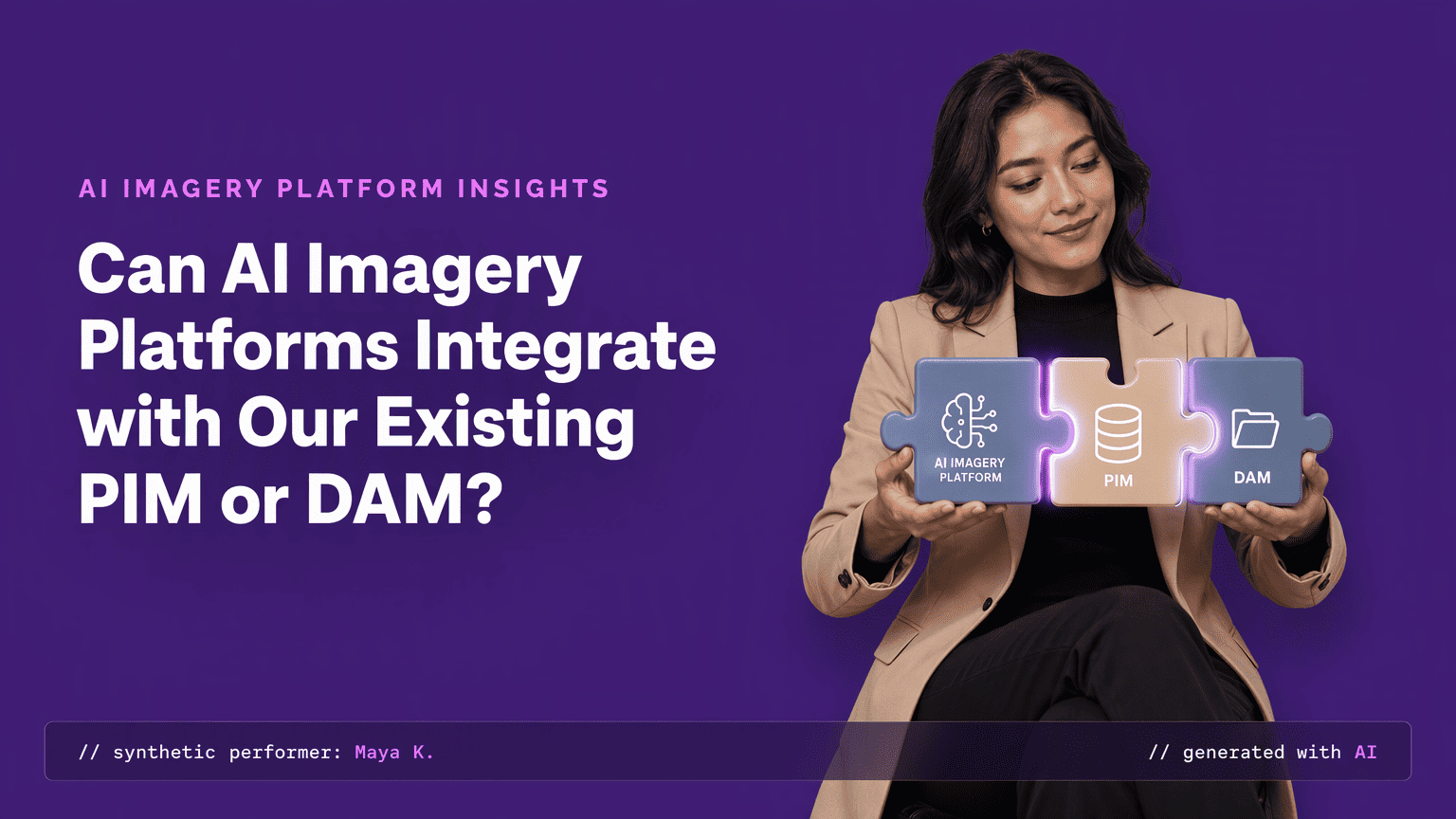
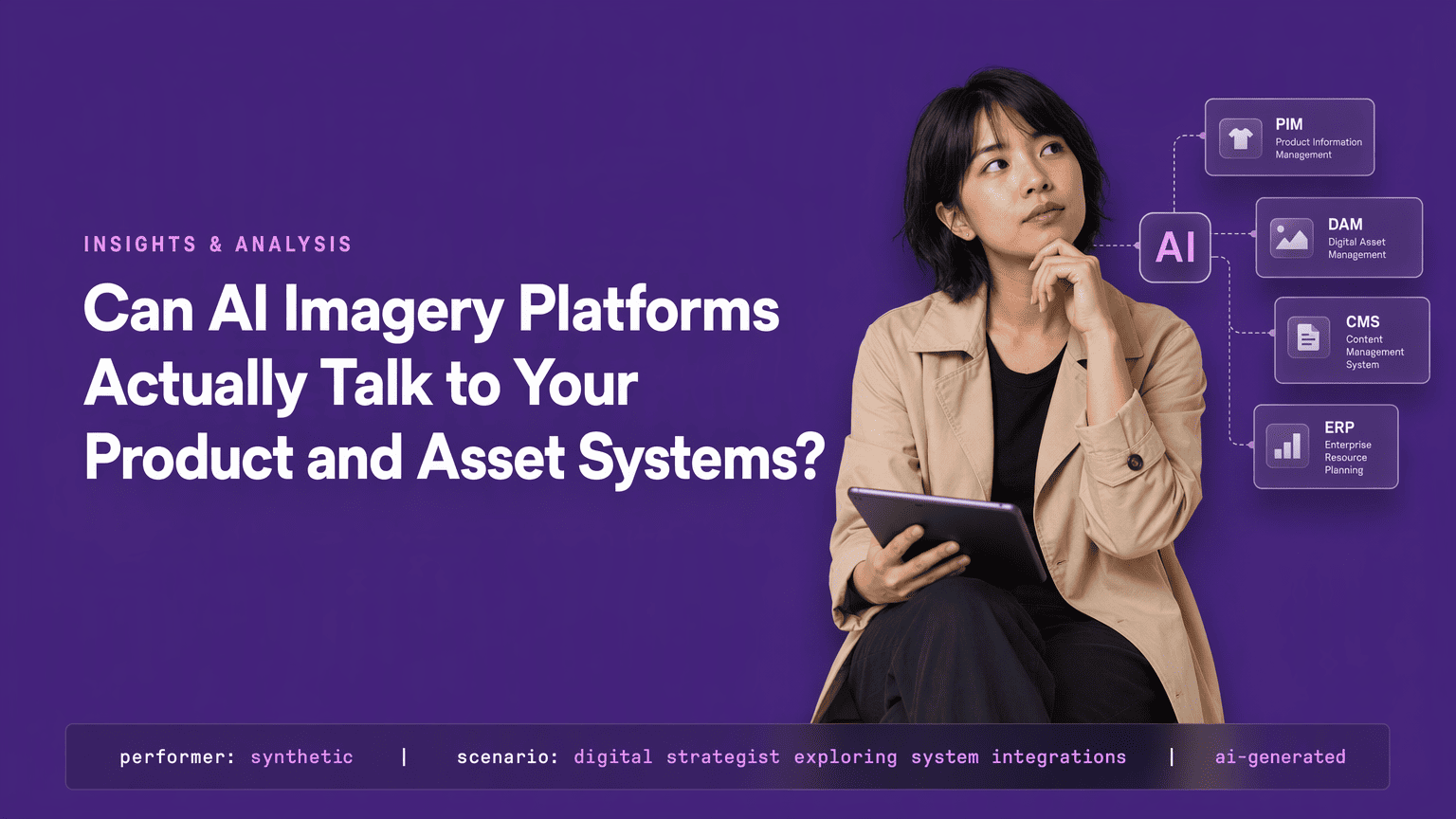
A multi‑brand holding company rarely runs the same tech stack across every label. One brand lives in Shopify with an Instagram‑first distribution model. Another runs a custom storefront, uses Klaviyo for email, and gets most of its volume from marketplace listings. A managed AI imagery platform has to connect to what each brand already uses instead of imposing a single integration standard.
Each brand keeps its own connected accounts for Shopify, Instagram, email platforms, and marketplace channels. The platform reports on each one individually and also side by side. Lumesa's pipeline sends finished assets straight into those configured endpoints. Brands do not give up their tools or merge accounts to get there. The setup preserves the data isolation that keeps proprietary brand information secure.
When the holding company adds a label or sells one off, the remaining brand stacks stay intact. Nobody has to unplug something that another brand still depends on.
Step 8: Govern Through Brand‑Specific Approval Workflows and Human Review
Every AI‑generated draft routes to a brand‑specific reviewer who checks voice and accuracy before an image reaches a customer. Rejecting a draft does more than stop bad output. The rejection reason trains the AI model for that brand, so the next round of drafts comes back tighter.
Generate draft content per brand: The AI produces visual assets against the brand's trained model.
Route to brand‑specific approver: The human reviewer checks fit accuracy, drape behavior, color fidelity, and visual rules.
Approve or reject with reasoning: Approved images publish. Rejected images include a specific reason explaining what broke the guardrail.
Feed rejection reason into the training loop: The brand's AI model absorbs the feedback and cuts the same error pattern on the next generation cycle.
Verify every output: Nothing goes live without a human sign‑off that the guardrails held.
You can set reviewers who carry deep knowledge of the brand's aesthetic rules, not generic QA checklists. Fit and drape errors tend to be the sharpest tells of an AI-generated fashion image, so reviewers who know the brand's tailoring standards catch problems a generalist would miss. Color fidelity is the other big trap. A slub cotton sweater in "heathered navy" that renders as flat charcoal online drives returns and erodes trust. The reviewer's job is to flag those slips before the image ever meets a product page. Each rejection that cites a specific visual failure, not a vague "looks off," gives the training loop a clean signal to learn from.
The workflow also protects you when platform model weights shift during an update. An approver who knows the brand's guardrail spec can spot a subtle regression in fabric texture or lighting that might otherwise slip through for weeks. Over time, the training loop sharpens outputs enough that the review step gets faster. You stop catching the same mistakes repeatedly.
Step 9: Calibrate Trust and Future-Proof with Scalable Pricing Models
Pricing that scales properly is a structural requirement of single-platform multi-brand operations. When you run six brands today and potentially ten next year, the cost model needs to stay transparent and predictable at current and projected brand counts. If it doesn't, a quarterly surprise can undermine leadership's commitment to the strategy.
Monitoring each brand's presence in AI assistants is a parallel trust signal. Perry Ellis is tracking a pattern where AI summaries and overviews intercept search journeys before shoppers reach brand sites, causing direct traffic to drop. A managed platform that reports on how each brand appears in ChatGPT, Gemini, and similar assistants defends the portfolio against traffic erosion that most teams do not measure until it is severe.
Conclusion
Multi‑brand holding companies need one managed AI imagery platform with hard walls between brands, not a scattered set of tools. Run it centrally, and you stop paying for the same work twice.
Brand DNA lives in the system as rules. Data stays siloed. A human signs off before anything ships. Those three locks keep visual identity from blurring across the portfolio.
The payoff shows up in speed. New creative rolls out across channels and languages in minutes, and every brand still looks exactly like itself. That pairing of velocity and un‑diluted identity is the edge holding companies should be building right now.
Content Requirement | Shared Structural Pipeline | Brand‑Specific Data That Varies |
Product‑only images | Flat‑lay and packshot input processing | Lighting ratio, shadow depth, color profile, cropping rules |
On‑model lifestyle shots | Garment‑on‑white to model generation | Model diversity, styling cues, scene context, fit standards |
Social and email graphics | Template‑driven composition engine | CTAs, typography palette, editorial mood, aspect ratios |
Marketplace listings | Compliance‑aware delivery pipeline | Resolution, background policy, zoom‑level requirements per platform |
Multi‑language visual assets | Scene‑context adaptation layer | Localized styling cues, culturally appropriate model casting |
Lumesa scales visuals across web, email, and paid channels, generating on‑model images, lifestyle scenes, and banners from a single product shot. One shot replaces the cycle of rebriefing a creative team for every format while keeping each brand's visual signature intact.
See Which Fit Makes Sense for Your Catalog
If you're trying to figure out whether your actual need is a full catalog production platform or a narrower feature like a simple try-on preview, request a demo and we'll talk through the actual scope of what you're solving for, not just the platform's capabilities.
Frequently Asked Questions
What are the operational advantages of a managed AI imagery platform over self‑serve tools for a multi‑brand holding company?
A managed platform provides a single infrastructure and billing layer operated by one team, eliminating the duplication that occurs when every brand separately procures tools, hires prompt engineers, and builds workflows. Self‑serve tools leave prompting, quality control, and consistent brand enforcement on the user across fragmented accounts, which multiplies cost and inconsistency with each added brand.
How does the Brand DNA system ensure visual consistency across different brands while preserving each brand's unique aesthetic?
The system trains a discrete AI model per brand using only that label's style guides, approved imagery, and composition rules. The trained model enforces the specific lighting, color tolerance, and styling standards of that brand so that identical creative briefs yield visually distinguishable outputs consumers can attribute correctly.
What types of visual content can a holding company centralize and scale across its portfolio with an AI imagery platform?
A holding company can centralize product‑only packshot imagery, on‑model lifestyle photography, social media graphics, email banner assets, marketplace‑compliant listings, and localized scenes across multiple languages. A single product shot can multiply into the full channel‑specific set while preserving each brand's unique visual identity.
How can a multi‑brand company use AI‑driven visual experimentation and analytics to improve performance metrics like conversion rates?
The platform generates multiple visual variants per brand and deploys structured A/B tests automatically, surfacing which creative approach drives higher conversion for that specific audience. Teams can compare per‑brand performance metrics side by side, catching underperforming creative quickly rather than waiting for manual data pulls that once took days.
What is the onboarding and brand training process for multiple distinct brands on a single AI platform?
Each brand feeds its own style guides, approved imagery, and visual rules into the platform once. The training process follows these steps:
Train a separate AI model for each brand using only that brand's materials.
Test the training validity by issuing identical briefs to two brands and verifying the outputs are visually distinct.
Proceed to full‑scale rollout only after validation confirms the distinct outputs.
How does an AI imagery platform integrate with existing ecommerce and marketing technology stacks across multiple brands?
Each brand maintains its own individually connected accounts on channels like Shopify, Instagram, and email platforms such as Klaviyo. The AI platform delivers assets into these per‑brand endpoints without forcing a stack consolidation, reporting on brands individually and side‑by‑side while preserving data isolation between labels.
Sources
AI Platform for Multiple Brands: 7 Tests Before You Buy - v1be.io
AI Across Multiple Ecommerce Brands: The Portfolio Playbook - www.onlinestorecoach.com

Comments