Can AI Change a Model’s Skin Tone or Body Type in Product Photos? Yes, It Can. Here’s What That Means for Your Brand.

Introduction
Your best-selling jacket is photographed on a single model, but your customers span every skin tone and body type. The old solution was a $50,000 multi-day shoot with multiple models, samples, and endless logistics. Today, artificial intelligence flags that image and asks a sharper question: can we alter the model rather than re-shoot the product?
The technical answer is an unequivocal yes. AI platforms can now recalculate skin pigmentation to an objective, continuous scale and remap garment geometry onto a different body shape. That capability lands in a minefield of ethical scrutiny, fragmented regulation, and hard consumer trust questions.
Lumesa, an AI visual infrastructure platform that trains on a brand's own DNA before generating a single image, illustrates both the operational power and the tightrope every ecommerce brand now walks. This article unpacks the color science, the compositing mechanics, the reported conversion lifts, and the 2026 regulatory patchwork that define whether altering a model with AI is a strategic asset or a reputational risk.
Key Takeaways
The bottom line for ecommerce decision-makers: AI-driven alteration of skin tone and body type is operational today, but success is about colorimetric rigor and workflow control, not novelty.
Skin tone alteration relies on object measurement, not visual guesstimates: The underlying technique uses the Individual Typology Angle (ITA), a number calculated from CIELAB color values, mapping to the 10-point Monk Skin Tone Scale to replace subjective legacy scales.
Workflow splits into two distinct camps: You either adopt a managed service that handles the pipeline from brand training to final deployment, or you navigate a self-serve tool that demands prompt engineering, quality control, and manual retouching.
Reported conversion impact is material: Lumesa’s case studies show a 3% conversion lift for a global luxury accessories holding company and a doubled production volume in six months for a $1B+ apparel holding company, achieved with no physical samples or shoots.
Regulatory risk in 2026 is fragmentation, not absence: With no single federal US mandate for AI imagery labeling, brands navigate state-level proposals, FTC deceptive-advertising principles, and unresolved model likeness rights, creating compliance confusion.
Bias and trust are the real scalability brakes: Training architectures that inherit the Fitzpatrick scale's documented racial bias or alter body shapes without consent erode the consumer trust that conversion lifts are built on.
At a Glance
Here is how the options compare across the dimensions that matter most.
Consideration | Managed Service (e.g., Lumesa) | Self-Serve AI Tool |
Skin tone accuracy | Uses ITA + Monk Scale for objective, continuous mapping | Often relies on subjective filters or Fitzpatrick scale |
Body type alteration | Remaps garment geometry onto different body shapes | Variable; may distort product fit or require heavy editing |
Conversion impact | Documented 3% lift and doubled production volume | Highly dependent on user skill and tool capabilities |
Regulatory compliance | Provider handles labeling and state-level nuance | Brand bears full compliance burden |
Bias mitigation | Trained on brand’s own diverse data; Monk Scale reduces bias | Risk of inheriting Fitzpatrick bias; consent unclear |
Scalability | Fast, consistent output at volume | Slower; requires review for each image set |
The Core Technique: Measuring Skin Tone with ITA and CIELAB Science
The engine underneath skin tone alteration is not a creative filter. It is a quantitative measurement derived from the CIELAB color space, a three-dimensional model developed to map every color the human eye can perceive. Within that space, researchers calculate the Individual Typology Angle (ITA), a numeric value that places skin pigmentation on a continuous physical scale rather than a subjective visual category.
An automated assessment algorithm computes the ITA from CIELAB color values using computer vision models like DensePose and OpenFace. The output is a data point, not an opinion. That feeds directly into the newer 10-tone, open-source Monk Skin Tone Scale, a tool purpose-built to address the well-documented shortcomings of the older Fitzpatrick scale. Validation studies on 3D body scans and AI-generated images demonstrated high agreement with Monk classifications but less consistent alignment with Fitzpatrick types.
Why that gap matters: the Fitzpatrick scale, originally devised to gauge UV radiation response, started with four types tailored for fairer skin and only later expanded to include two darker skin types. Medical researchers now flag it as prone to "inter-rater variability and racial bias." When an AI pipeline relies on Fitzpatrick-derived labels, it inherits a structural bias that systematically misclassifies darker tones. CIELAB and ITA replace that subjectivity with physics.
Every skin tone contains some red and yellow tones. For darker skin, the blue channel matters too. An AI system engineered on CIELAB principles adjusts those channels numerically, not by intuition. The result is a skin tone alteration that can be repeated, audited, and verified across thousands of SKUs, a threshold that subjective visual matching can never cross.
How Lumesa AI Trains Models on Brand DNA to Preserve Identity
Generic AI image generators produce generic results, a fatal flaw when altering sensitive attributes like body type or skin tone for a brand that spent years building a specific visual identity. Lumesa AI, which describes itself as AI visual infrastructure for ecommerce, sidesteps that by ingesting a brand's styling standards, composition rules, photography guidelines, and fit standards before a single image is produced. This pre-generation training phase means the AI learns the non-negotiable visual rules (the exact product detail, the lighting geometry, the approved pose library) and treats them as fixed constraints while varying only the requested model attributes.
The platform builds what it calls a brand-trained visual model, which preserves the exact styling language, aesthetic, and rules across every output. When a luxury accessories brand needs the same silk blouse shown on models with three different skin tones for three regional storefronts, the AI already knows the fabric drape, the collar pitch, and the lighting ratio from the brand's own reference set, locking the product constant so only the model's measured skin tone shifts.
Managed Service vs. Self-Serve Tools: The Full Workflow Divide
The operational difference between a managed AI imagery service and a self-serve tool is who carries the production pipeline. One path hands you the finished output; the other hands you the controls along with the responsibility.
The Mechanics of Altering Body Type: The Hollow Man Compositing Technique
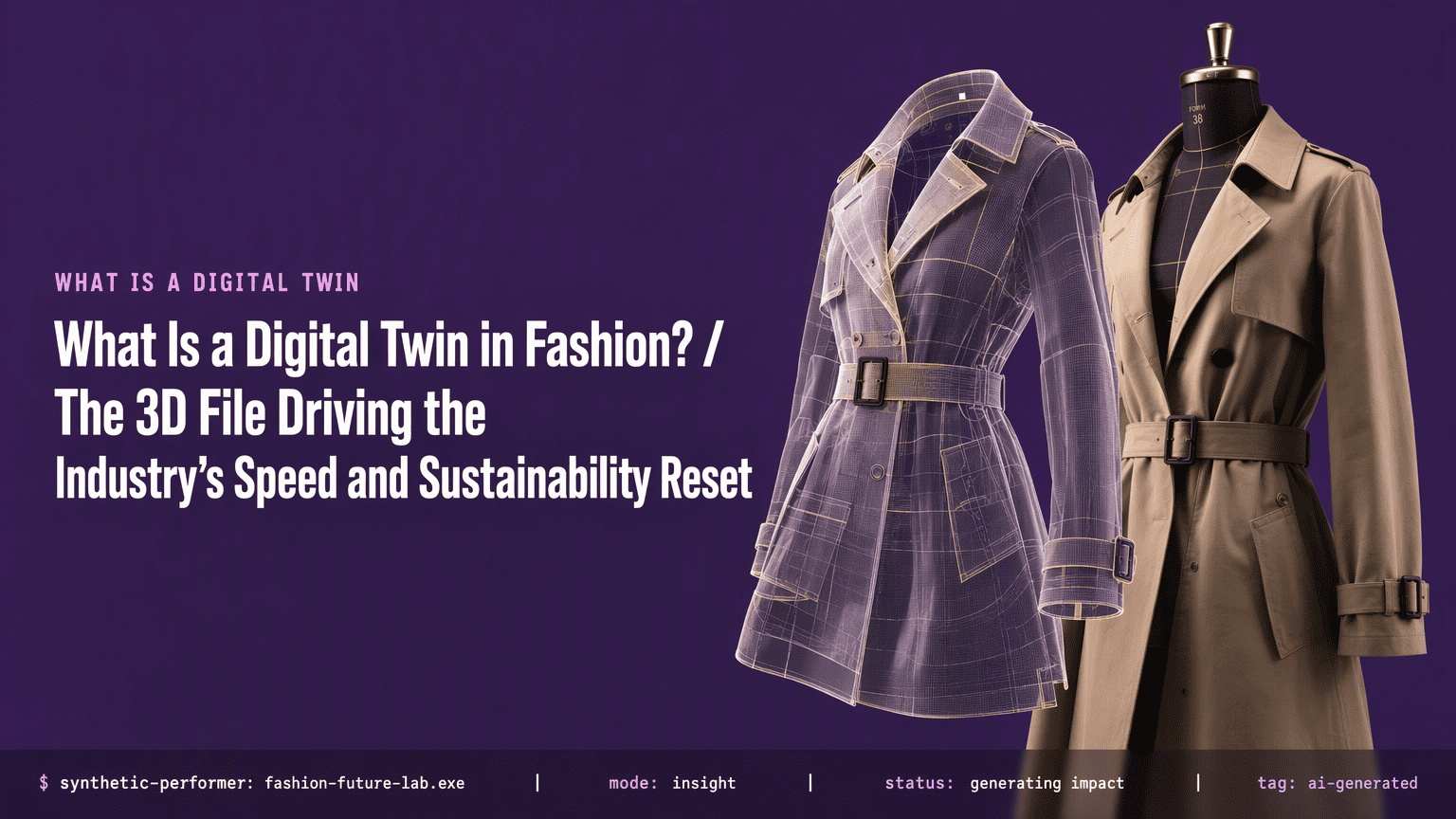
Adjusting a model's apparent body type without distorting the garment relies on a compositing method the industry calls ghost mannequin, hollow man, or invisible mannequin photography. In a traditional studio, this means capturing multiple exposures: an inside shot of the neckline, an inside shot of the waistband, and the exterior draped on a form, then merging them in post-production to create the illusion that the garment is worn by an invisible person. Lumesa's AI pipeline automates and extends this logic by extracting the garment's texture and accurate geometry from the reference shots. That fabric data is reprojected onto a new body shape, a digital twin with different measurements.
The garment detail holds constant because it is sourced from the physical product capture. An internal neckline seam and a structured shoulder transfer intact. Only the supporting body geometry changes.
Pure generative approaches fabricate the body and the garment simultaneously, a shortcut that frequently warps buttons, collars, and hem structure. The compositing method sidesteps that uncanny-valley artifact. Getting the transition from inside-lining to exterior fabric right is the technical hurdle.
A single misaligned layer and the collar reads as painted on. This is the functional case for a physics-aware pipeline: the AI respects seam placement and fabric tension instead of guessing at them.
Ethical and Practical Risks: Bias, Trust, and Model Rights
The ethical risks of AI-generated retail imagery unfold across four interrelated fronts:
Structural bias: If a model retraining pipeline uses Fitzpatrick skin type labels as ground truth, it bakes in the scale's original sin, four types tailored for fairer skin, later patched with two darker types. An AI altering skin tone against that flawed yardstick systematically misrepresents darker pigmentation.
Consumer trust: When a shopper discovers that the model wearing their size was a composite generated without disclosure, the psychological contract frays. Brands today report what Lumesa calls "real confusion around AI labeling rules and model likeness rights."
Property rights: Altering a model's body shape without consent or compensation creates a new property right problem. A real model's likeness, digitized and morphed across a catalog without their knowledge, surfaces unresolved questions about who owns a body scan when it becomes a production asset.
Unrealistic body standards: If a brand uses AI to silently thin every model's waist by 5%, the technology bypasses the editorial guardrails Unilever publicly adopted years ago when it committed to stop altering models' bodies and skin color in advertising. The capability to do it at scale makes the ethical line easier, not harder, to drift across.
The Measurable Ecommerce Impact: Conversion Lifts and Production Scale
ROI data is emerging from controlled deployments, not theoretical projections. The numbers below come from Lumesa's published case studies and provide a concrete starting point for ecommerce teams building a business case.
Luxury conversion lift: A global luxury accessories holding company achieved a 3% conversion lift, reported as the first luxury retail deployment to hit that threshold at scale.
Production volume at scale: A $1B+ multi-brand apparel holding company doubled its production volume in six months with no samples, no physical shoots, and no added studio overhead.
The inverse cost logic: On-model photography for 100 SKUs with traditional methods quickly runs into tens of thousands of dollars and weeks of calendar time. Lumesa's managed service model collapses that timeline by removing the sample logistics and reshoot dependency, which shifts budget from production logistics to iteration and testing.
Condition on the claims: The case study figures are single-instance results and no sample size or statistical methodology is disclosed; treat them as directional evidence from named deployments, a single compliance checkbox.
Navigating the 2026 US Regulatory Patchwork for AI Imagery
As of 2026, no single federal US law requires brands to label AI-generated or AI-altered model imagery. That void creates an operational vacuum. Brands report, per Lumesa's direct industry observations, "real confusion around AI labeling rules and model likeness rights."
The active regulatory pressure is bubbling up from the states. A scattering of state-level proposals in 2026 targets deceptive AI-generated content, and some draft bills directly address AI imagery in advertising. For a national ecommerce brand, the practical overhead is legal fragmentation. A site build compliant in California could face risk in a different state six months later if the AI disclosure language doesn't match newly enacted local law.
Federal Trade Commission guidelines on deceptive advertising remain the nearest thing to a national backstop. The FTC has not issued a specific AI-imagery labeling rule, but its core principle applies: if an image misleads a reasonable consumer about a material product attribute, it can trigger enforcement. The emerging model rights debate adds another layer. If a digital twin is built from a real model's scan and that model retains ownership and earns from each use, altering that twin's body and redeploying it without consent crosses from an aesthetic choice into a legally uncharted use of biometric data.
Conclusion
AI can and does alter a model's skin tone and body type in product photos, with a technical backbone built on colorimetric measurement rather than visual guesswork, and a compositing pipeline that preserves garment integrity while remapping body geometry. The conversion numbers are real, a 3% lift in luxury and a doubled production volume at scale validate the business case for brands that execute well. But those gains sit squarely on a brand's willingness to ground its pipeline in rigorous, bias-aware measurement (ITA and Monk, not Fitzpatrick), to train models on its own visual DNA so the product never drifts, and to build a transparent workflow that navigates the 2026 state-level regulatory patchwork. The brands that get this right treat model alteration not as a shortcut, but as a controlled production science; the ones that don't will find the conversion lift erased by a trust deficit.
See Which Fit Makes Sense for Your Catalog
If you're trying to figure out whether your actual need is a full catalog production platform or a narrower feature like a simple try-on preview, request a demo and we'll talk through the actual scope of what you're solving for, not just the platform's capabilities.
Frequently Asked Questions
What is the underlying technique used to change skin tone or body type in AI-generated product photos?
Skin tone alteration uses the Individual Typology Angle (ITA), a numeric value calculated from CIELAB color space data, which maps to an objective 10-point Monk Skin Tone Scale. Body type changes rely on hollow-man compositing, extracting garment textures from physical reference shots and reprojecting them onto a different digital body geometry while keeping the product detail fixed.
How does Lumesa AI specifically train its models to preserve brand identity while altering model appearance?
Lumesa ingests each brand's styling standards, composition rules, photography guidelines, and pose library before generating any image. This pre-production phase creates a brand-specific model that locks in non-negotiable product details and visual language, then varies only the requested model attributes like skin tone or body type against those constraints.
What are the key differences between a managed service and a self-serve tool for altering model attributes in fashion imagery?
A managed service handles the full pipeline: training on brand DNA, generating and curating images, managing metadata and transformations, and deploying directly into the storefront. A self-serve tool provides the generation engine but leaves prompt engineering, quality control, retouching, metadata tagging, and performance optimization to the internal team.
What are the ethical and practical risks of using AI to change a model's body type or skin tone?
The primary risks are structural bias from training data that uses flawed scales like Fitzpatrick, consumer deception if AI alteration is undisclosed, the perpetuation of unrealistic body standards at scale, and unresolved model likeness rights when a real person's digital twin is altered without consent or compensation.
What measurable impact do AI-generated models have on ecommerce conversion rates?
Lumesa reports a 3% conversion lift for a global luxury accessories holding company and a doubled production volume in six months for a $1B+ multi-brand apparel holding company, both achieved with no physical samples or additional photoshoots. These are single case study results and should be treated as directional.
How does the US regulatory landscape treat AI-modified product imagery in 2026?
As of 2026, no single federal US law mandates labeling AI-modified imagery, creating operational confusion. Active pressure comes from a patchwork of state-level proposals, and while the FTC has no specific AI imagery rule, its general prohibition on deceptive advertising applies. Model likeness rights remain legally unresolved.
Sources
Lumesa | LinkedIn - library.vu.edu.pk
Beyond Fitzpatrick: automated artificial intelligence-based skin tone analysis in dermatological patients | npj Digital Medicine - www.nature.com
How to adjust skin tone in Photoshop - Adobe - www.adobe.com


Comments